 Image 1 of 3
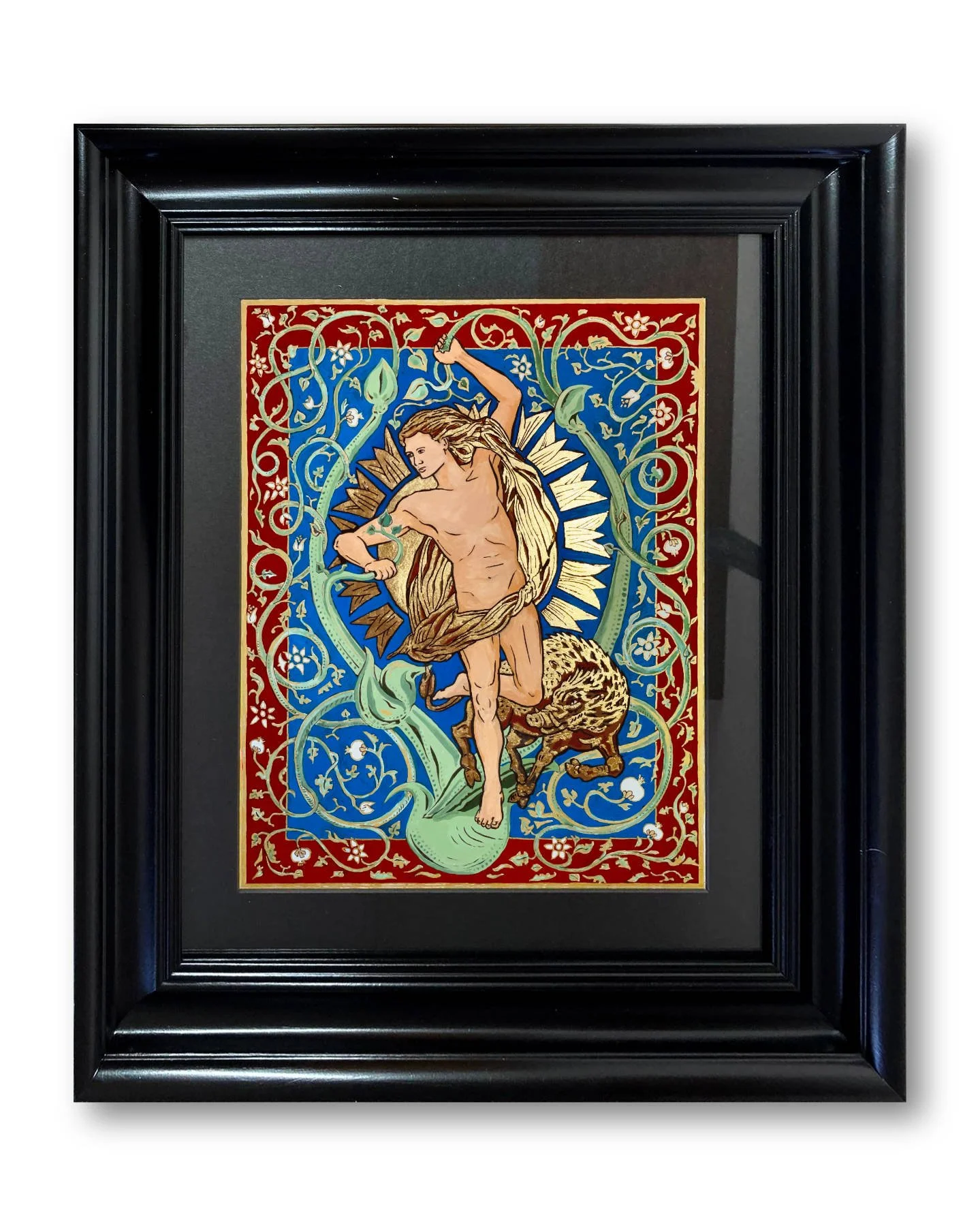 Image 2 of 3
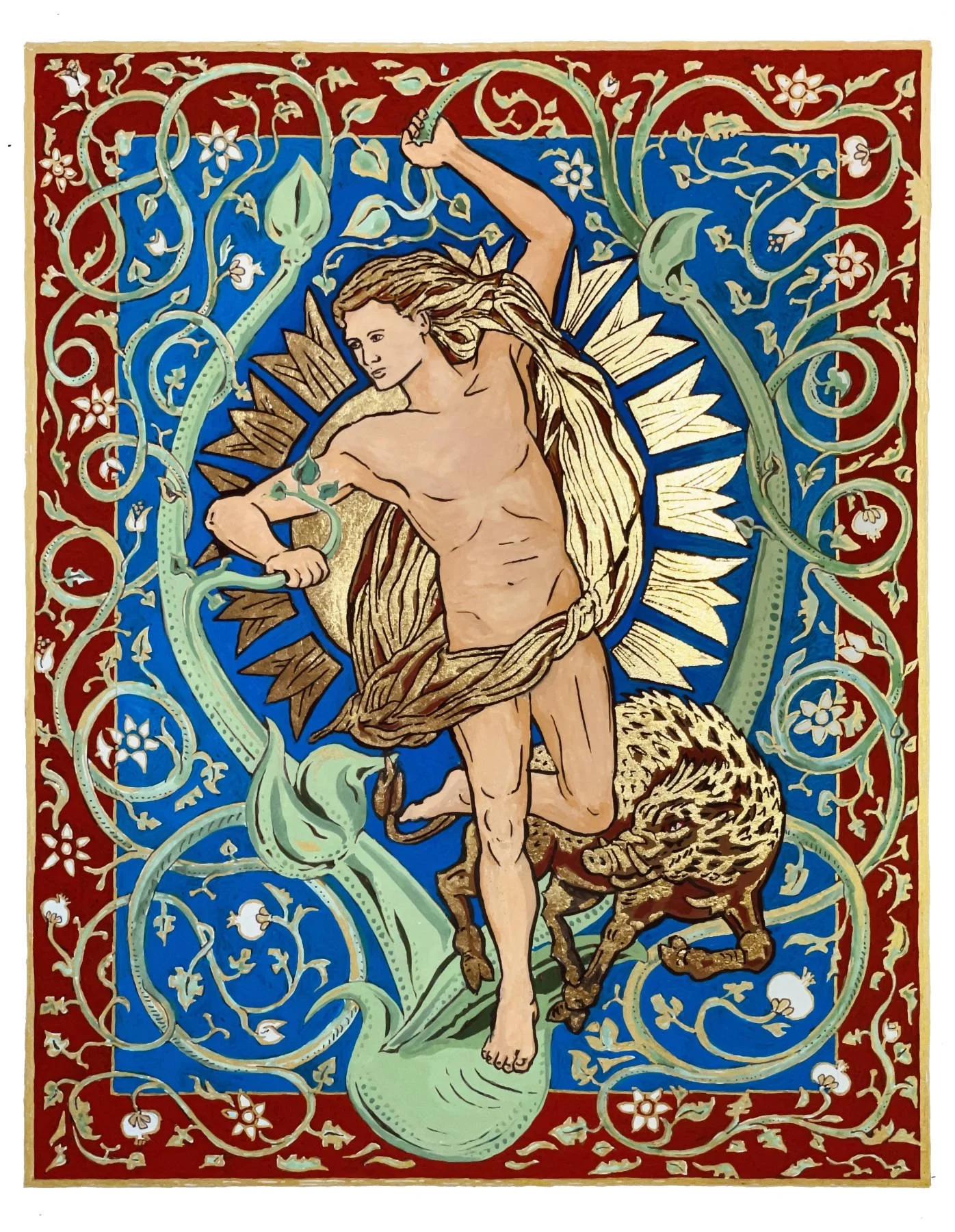 Image 3 of 3
Gouache and Gold Leaf
20” x 16” including frame
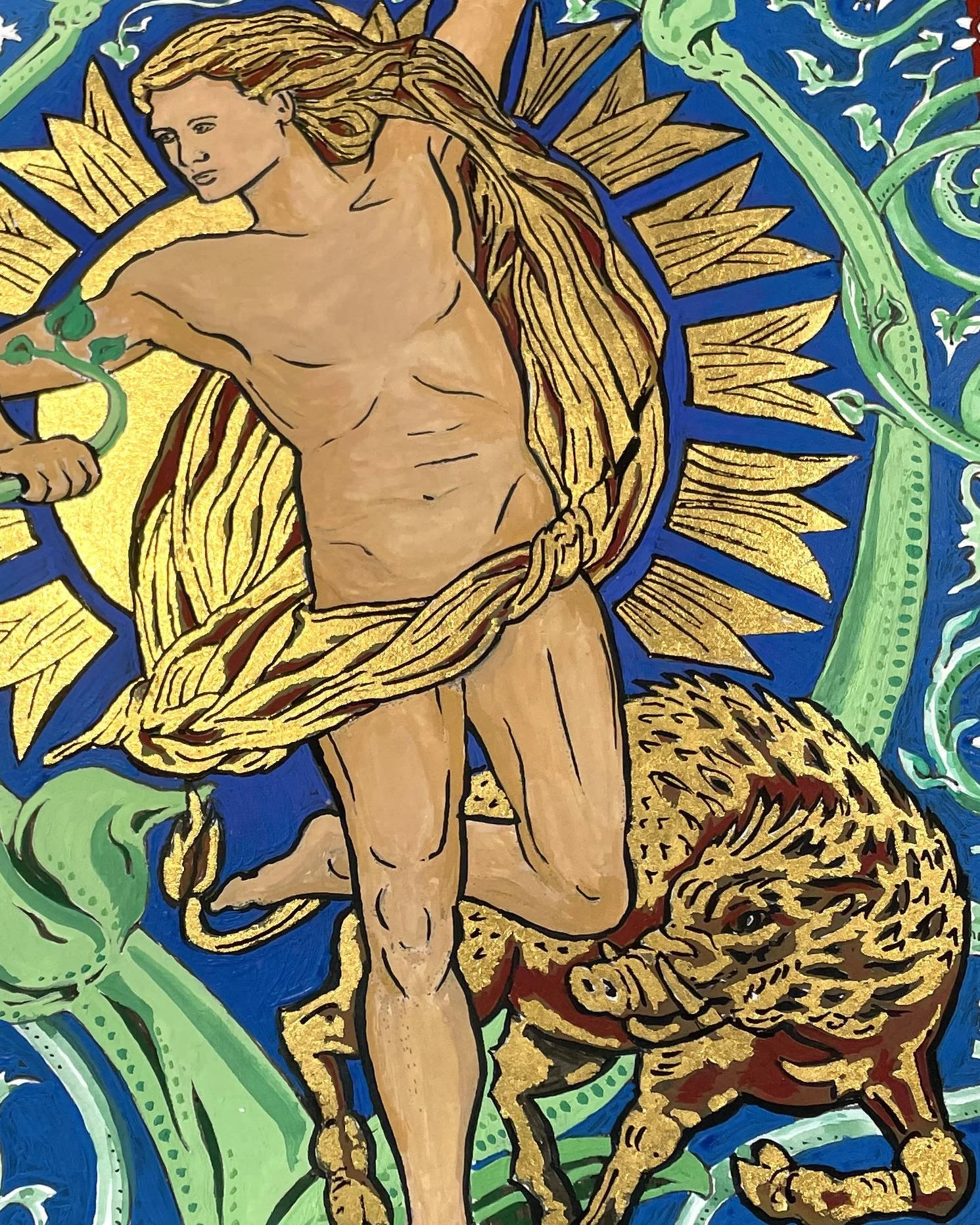
This artwork reimagines the Norse god Freyr through the vibrant, gilded lens of a medieval manuscript. Known to the Vikings as the deity of sunshine, peace, bountiful harvests and fertility, Freyr is presented here as a figure of pure life-force. At the heart of the illumination, he is enveloped by a radiant sun of gold leaf, while at his feet stands his magical companion, the golden boar Gullinbursti. Legend tells that the boar’s bristles glowed so intensely they could turn the darkest night into day, a brilliance captured here through the use of traditional gold accents.
Because Freyr represents the raw, procreative power of nature, he is framed by a dense thicket of winding, organic plants. A closer look at the spiralling roots and stems reveals phallic shapes, offering a bold and historically rooted nod to his ancient role as a god of fertility. These intricate natural patterns are highlighted in gilded paint, mirroring the "marginalia" often found in the borders of sacred medieval texts.
The piece has a deep red border and a rich blue background, colours chosen to evoke the regal palette of early royal prayer books. This work bridges the two distinct worlds of the Middle Ages and the wild energy of Northern myth. It is a celebration of growth, light, and the enduring power of the natural world.
Gouache and Gold Leaf
20” x 16” including frame
This artwork reimagines the Norse god Freyr through the vibrant, gilded lens of a medieval manuscript. Known to the Vikings as the deity of sunshine, peace, bountiful harvests and fertility, Freyr is presented here as a figure of pure life-force. At the heart of the illumination, he is enveloped by a radiant sun of gold leaf, while at his feet stands his magical companion, the golden boar Gullinbursti. Legend tells that the boar’s bristles glowed so intensely they could turn the darkest night into day, a brilliance captured here through the use of traditional gold accents.
Because Freyr represents the raw, procreative power of nature, he is framed by a dense thicket of winding, organic plants. A closer look at the spiralling roots and stems reveals phallic shapes, offering a bold and historically rooted nod to his ancient role as a god of fertility. These intricate natural patterns are highlighted in gilded paint, mirroring the "marginalia" often found in the borders of sacred medieval texts.
The piece has a deep red border and a rich blue background, colours chosen to evoke the regal palette of early royal prayer books. This work bridges the two distinct worlds of the Middle Ages and the wild energy of Northern myth. It is a celebration of growth, light, and the enduring power of the natural world.